Read our complete groutmixing guide to achieve flawless tile joints. Learn the exact water ratios, slaking times, and mixing techniques for perfect results.
Table of Contents
- Mastering the Process
- Achieving the Perfect Consistency
- Understanding the Slaking Phase
- Application Techniques and Environmental Controls
- Your Most Common Questions
- Comparing Preparation Methods
- Practical Tips for Success
- Key Takeaways
For more about Groutmixing guide, see learn more about groutmixing guide.
Key Takeaway
A groutmixing guide is a comprehensive framework for preparing cementitious compounds for tile installation. Proper preparation ensures structural integrity, prevents air pockets, and guarantees a uniform mix that adheres perfectly to the substrate without premature hardening during the critical working window.
By the Numbers
- The recommended initial water amount for mixing is about 75 percent of the total water needed (The Home Depot, 2025)[1].
- A common slaking time after initial mixing is about 10 minutes (The Home Depot, 2025)[1].
- Cementitious compounds require a minimum mixing time of 3 to 4 minutes to achieve proper consistency (SpecChem, 2025)[2].
- In cold weather, the substrate must be kept at a minimum of 4 degrees Celsius before placement (Big League Construction Services, 2025)[3].
Groutmixing guide principles form the foundation of any successful tile installation project. Whether you are laying ceramic in a bathroom or large-format porcelain in a commercial space, the way you prepare your joint compound dictates the longevity of the floor. Many DIYers and even some professionals rush this crucial step, leading to weak joints, powdery residues, or cracked lines. This article breaks down the science and technique behind creating the perfect consistency. We will explore the correct water ratios, the vital slaking process, and the mechanical action required to eliminate lumps. By following these proven methods, you ensure your material remains malleable and durable. Read on to master the essential techniques that transform dry powder into a resilient, smooth filling agent for your next tiling endeavor.
Mastering the Groutmixing Guide Process
The right tools significantly impact the final quality of your cementitious compound. Selecting the proper equipment ensures that the dry powder and liquid integrate seamlessly without introducing excess air. For standard residential jobs, a heavy-duty margin trowel and a sturdy bucket suffice. However, larger projects demand mechanical assistance. Big League Construction Services recommends using a paddle-type mixer attached to a low-speed drill for large batches to maintain a steady, controlled agitation (Big League Construction Services, 2025)[3].
When selecting materials, reviewing the best cementitious options for tile joints helps match the product to the specific joint width. Sanded varieties are ideal for wider gaps, while unsanded versions work best for narrow seams and delicate surfaces. Always measure your dry powder by weight rather than volume to ensure accuracy. Pour the powder into the bucket first, then create a crater in the center. This prevents dry clumps from sticking to the bottom corners of the bucket, which is a common issue when liquid is added before the dry ingredients. Proper tool selection and material sequencing set the stage for a flawless application.
Achieving the Perfect Consistency
Attaining the correct texture is the most critical phase of preparing your joint filler. The water ratio dictates the structural integrity of the final cure. Adding too much liquid weakens the chemical bonds, resulting in a crumbly finish that shrinks and cracks. The Home Depot advises that the recommended initial water amount should be about 75 percent of the total liquid specified on the packaging (The Home Depot, 2025)[1]. Add the remaining liquid gradually as the paddle mixer incorporates the dry ingredients.
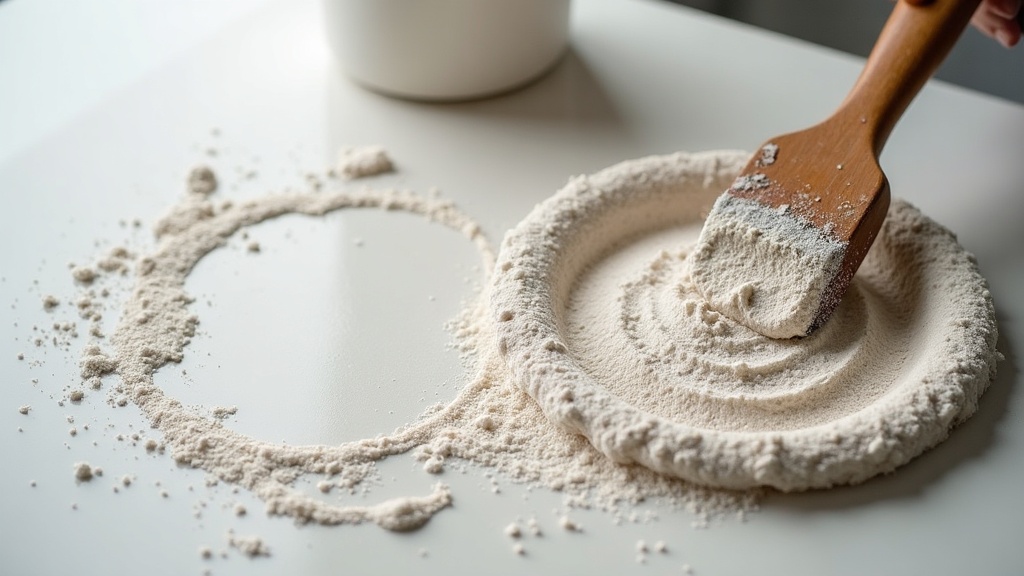
Visual and tactile cues are your best indicators of success. According to The Home Depot Editorial Team, “The consistency of grout should resemble smooth peanut butter. It should be malleable but not dripping from the trowel when lifted” (The Home Depot, 2025)[1]. If the mixture is too stiff, it will not press deeply into the joints. If it is too runny, it will slump out of the seams and take forever to harden. The Rubi Blog USA Editorial Team notes, “You should keep mixing grout until there are no lumps. This is how you’ll know you’ve achieved a uniform mix” (Rubi Blog USA Editorial Team, 2025)[4]. Scraping the sides of the bucket frequently ensures no dry pockets remain.
Understanding the Slaking Phase
Allowing the grout mixture to rest is a non-negotiable step that activates the chemical binders. Slaking is the period where the mixed grout sits undisturbed, allowing the water to fully penetrate the cementitious particles and polymers. This hydration process is what gives the compound its adhesive strength and flexibility. Skipping this step leads to a weak bond and a higher likelihood of efflorescence or powdery residue on the surface.
Most manufacturers specify a precise resting period. A common slaking time after the initial blend is about 10 minutes (The Home Depot, 2025)[1]. During this window, the material will visibly thicken as the chemicals activate. Once the resting period concludes, you must remix the batch briefly without adding any extra water. Adding liquid after the slaking phase breaks the established chemical matrix, ruining the structural integrity of the batch. If the compound appears too thick after resting, it has likely begun to cure and should be discarded. Respecting the slaking timeline guarantees that your material performs exactly as engineered.
Application Techniques and Environmental Controls
Proper placement and temperature management ensure the compound cures without defects. The physical act of forcing the material into the joints requires a firm, sweeping motion with a rubber float. The SpecChem Editorial Team advises users to “Place grout from one side to avoid air pockets” (SpecChem Editorial Team, 2025)[2]. Pushing the material diagonally across the tiles forces it deep into the crevices while preventing it from being scooped back out.
Environmental conditions heavily influence the working window and final cure. High temperatures and low humidity accelerate evaporation, shortening the time you have to work before the material begins to harden. Conversely, cold conditions slow down the chemical reactions. Big League Construction Services emphasizes that in cold weather, the substrate must be kept at a minimum of 4 degrees Celsius before placement to prevent freezing and improper curing (Big League Construction Services, 2025)[3]. For comprehensive industry standards regarding temperature and humidity thresholds, refer to the Tile Council of North America installation guidelines. Monitoring the ambient climate ensures your tile installation withstands the test of time.
Your Most Common Questions
How long should I mix the compound initially?
SpecChem recommends mixing cementitious compounds for a minimum of 3 to 4 minutes to achieve the proper consistency (SpecChem, 2025)[2]. This duration ensures that all dry particles are fully wetted and integrated. Using a low-speed drill with a paddle attachment helps maintain a steady rhythm without whipping excess air into the batch. If you are preparing a very large volume, extending the initial blend time to 5 minutes ensures complete homogeneity. Always scrape the bottom and sides of the bucket halfway through to incorporate any stranded dry powder.
Can I add more water if it thickens after slaking?
No, you should never add more liquid once the resting phase is complete. The slaking process initiates the chemical hydration of the cement and polymers. Introducing additional water at this stage dilutes the active binders and breaks the structural matrix. This results in a weak, crumbly finish that is highly susceptible to cracking and shrinking. If the batch becomes too stiff to work with after remixing, it has exceeded its viable working window and must be discarded. Always mix smaller batches to ensure you can apply the material before it begins to set.
What happens if I use a high-speed drill to mix?
Using a high-speed drill introduces thousands of microscopic air bubbles into the wet compound. When the material cures, these trapped air pockets create voids that severely compromise the structural integrity of the joint. These voids make the surface highly porous, increasing the risk of water infiltration, staining, and mold growth. Furthermore, high-speed agitation generates friction heat, which can prematurely accelerate the curing process and shorten your working time. Always use a low-speed setting, ideally between 300 and 500 RPM, to fold the ingredients together gently and maintain a dense, solid fill.
How do I know when the mixture is ready to apply?
The ideal texture is often compared to smooth peanut butter. It should hold its shape when scooped onto a margin trowel and should not drip or slide off when the tool is tilted. The surface should appear glossy and uniform, without any visible dry streaks or unincorporated powder. When you draw a ridge through the center of the bucket with your trowel, the edges of the ridge should stand firm without immediately collapsing. Achieving this specific malleability ensures the compound will pack tightly into the joints and adhere securely to the edges of the tiles.
Comparing Preparation Methods
Different project scales require distinct approaches to achieve a uniform mix. Selecting the right method saves time and prevents material waste. The following table outlines the most common techniques referenced in any professional groutmixing guide.
| Method | Best For | Pros | Cons |
|---|---|---|---|
| Hand Trowel | Small repairs | No power tools needed | Labor intensive, prone to lumps |
| Drill and Paddle | Standard rooms | Fast, consistent texture | Can splash if speed is too high |
| Mortar Mixer | Large commercial jobs | Handles massive volumes easily | Difficult to clean, overkill for small tiles |
Practical Tips for Success
Refining your technique minimizes errors and extends the lifespan of your tile work. Follow these actionable best practices to elevate your results.
- Pre-wet porous tiles: Unglazed ceramic and natural stone absorb moisture rapidly. Dampening the surface prevents the tile from sucking water out of the joint compound, which causes powdery, weak seams.
- Clean tools immediately: Cementitious materials bond aggressively to metal and plastic. Wash your buckets, trowels, and paddle mixers with water before the residue hardens to save hours of scraping later.
- Use distilled water: Tap water often contains minerals and impurities that can alter the chemical reaction or cause discoloration. Distilled water guarantees a pure, predictable cure.
Proper maintenance after installation is just as critical as the initial application. To protect your newly sealed joints from moisture and dirt, read our comprehensive guide to cleaning and sealing tile joints. Taking these extra steps ensures your floors remain pristine for decades.
Key Takeaways
Mastering the techniques outlined in this groutmixing guide transforms a tedious chore into a precise science. By respecting the correct water ratios, honoring the slaking period, and controlling environmental factors, you guarantee a resilient and attractive finish. Proper preparation prevents the most common tile failures, saving you time and money on future repairs. If you encounter unexpected challenges during your project, consult our resource on troubleshooting common grout problems for targeted solutions.
Useful Resources
- How to Mix Grout. The Home Depot.
https://www.homedepot.com/c/ah/how-to-mix-grout/9ba683603be9fa5395fab9012db933cb - Mastering Cementitious Grout Applications: A Comprehensive Guide. SpecChem.
https://specchem.com/resources/mastering-cementitious-grout-applications-a-comprehensive-guide/ - Best Practices for Cementitious Grout Preparation and Placement. Big League Construction Services.
https://bigleaguecs.com/best-practices-for-cementitious-grout-preparation-and-placement/ - How to Mix Grout Perfectly Every Time. Rubi.
https://www.rubi.com/us/blog/how-to-mix-grout/