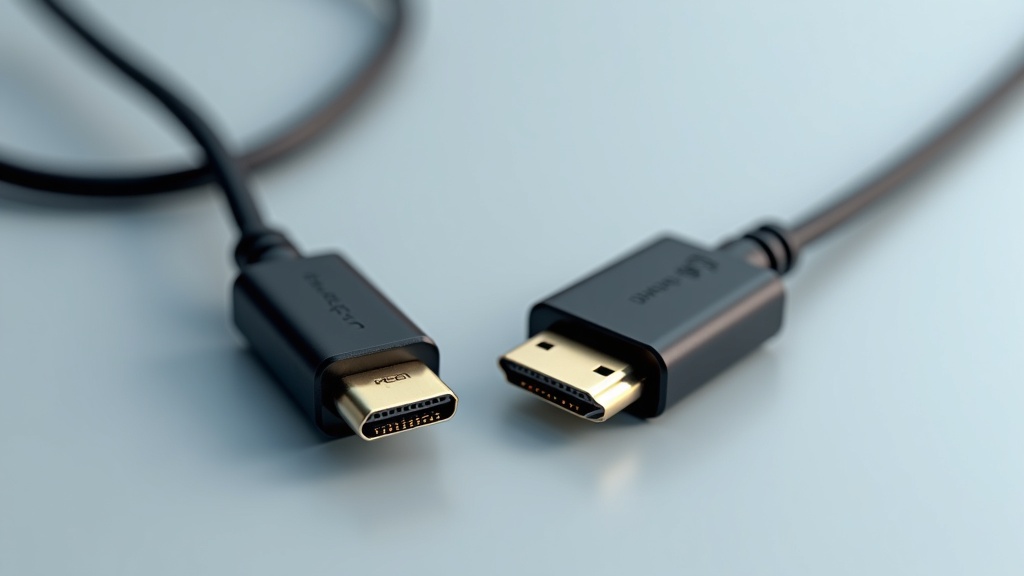
A usb c to hdmi and usb adapter is a versatile tool that lets you connect modern laptops, tablets, and smartphones to external displays while also passing through data or power. This guide explains how these adapters work, what to look for when buying one, and how to get the most out of your setup.
Table of Contents
- How a USB C to HDMI and USB Adapter Works
- Key Features to Evaluate
- Common Use Cases in the Field
- Troubleshooting and Compatibility Tips
- Frequently Asked Questions
- Comparison: Adapter Types
- Practical Tips for Reliable Connections
A usb c to hdmi and usb adapter bridges modern USB-C devices to HDMI displays while offering extra USB ports for peripherals. It is a plug-and-play solution that typically requires no driver installation, making it essential for presentations, multi-monitor setups, and field work in mining and tunneling operations.
Quick Stats: USB C to HDMI and USB Adapter
How a USB C to HDMI and USB Adapter Works
A usb c to hdmi and usb adapter is a compact device that converts the video signal from a USB-C port into an HDMI output while also providing one or more standard USB-A ports for connecting peripherals. This dual functionality sets it apart from a simple video adapter, as it allows users to plug in a mouse, keyboard, or flash drive alongside the display connection.
According to product guidance from Anker, these adapters are designed to enhance visual output by routing video from a USB-C source device to an HDMI display (Anker, 2026)[1]. They are typically plug-and-play devices that do not require additional driver installation (Anker, 2026)[1]. This makes them incredibly convenient for professionals who need to set up quickly on site.
The adapter works by utilising the Alternate Mode (Alt Mode) feature of the USB-C standard. When you plug the adapter into a USB-C port that supports DisplayPort Alt Mode, the port can output a native HDMI signal. The USB-A ports draw power from the same connection, enabling data transfer to and from connected devices. Some advanced models also support Power Delivery (PD) pass-through, allowing you to charge your laptop while using the adapter.
In industrial settings like mining and tunneling, where rugged laptops are common, a reliable usb c to hdmi and usb adapter is invaluable. Engineers often need to connect their field laptops to large monitors or projectors for reviewing geological survey data or tunnel boring machine telemetry. The extra USB port can be used for a secure USB drive containing critical site plans or a specialised input device for grout monitoring software.
Key Features to Evaluate
When selecting a usb c to hdmi and usb adapter, several technical features determine its suitability for your specific workflow. Not all adapters are created equal, and understanding these specifications helps avoid compatibility headaches.
Video Resolution and Refresh Rate
The most critical specification is the maximum supported video resolution and refresh rate. A basic adapter may support 4K at 30Hz, which is sufficient for presentations and document work. Higher-end models support 4K at 60Hz or even 8K at 30Hz, which is necessary for video editing or detailed CAD work. For mining and tunneling applications, where high-resolution geological maps or 3D models of underground structures are common, a 4K 60Hz adapter provides the clarity needed for precise analysis.
USB Port Specifications
The built-in USB ports vary in speed. Look for adapters with USB 3.0 (5 Gbps) or USB 3.1 Gen 2 (10 Gbps) ports for fast data transfer. Some budget adapters only offer USB 2.0 (480 Mbps), which is fine for a mouse but frustrating for transferring large survey files. Also consider the number of USB ports; two ports are often more useful than one, especially when you need both a mouse and a storage device connected simultaneously.
Power Delivery Support
Power Delivery (PD) pass-through is a game-changer for laptop users. It allows the adapter to draw power from a USB-C charger and deliver it to the laptop while the adapter is in use. This means you do not drain your battery during a long presentation or data analysis session. Check the wattage rating of the PD support; 60W or higher is ideal for most ultrabooks, while 100W is needed for larger workstations. In a remote mining camp, where power outlets may be scarce, a PD-capable adapter keeps your equipment running without juggling multiple chargers.
Common Use Cases in the Field
A usb c to hdmi and usb adapter finds application across a wide range of professional and personal scenarios. Its versatility makes it a staple in any tech kit.
Presentations and Client Meetings
For professionals in construction, mining, and engineering, presenting data to clients or stakeholders is routine. A usb c to hdmi and usb adapter allows you to connect your lightweight laptop to a large conference room monitor or projector. The extra USB port can hold a backup of your presentation or connect a clicker for advancing slides. The plug-and-play nature means you can walk into a meeting room and be connected in seconds.
Multi-Monitor Productivity
Many modern laptops have only one or two USB-C ports. Using a usb c to hdmi and usb adapter, you can add an external monitor to your setup, effectively doubling your screen real estate. This is invaluable for tasks like comparing geological cross-sections side-by-side or monitoring multiple data feeds from tunnel sensors. For those who need even more screens, some adapters support daisy-chaining or come with multiple HDMI outputs.
Data Transfer and Device Charging
Beyond video, these adapters serve as a hub for data transfer. Field engineers can quickly offload survey data from a USB drive to their laptop, or upload critical reports to a connected printer. When combined with a PD charger, the adapter becomes a single docking point: one cable from the wall powers your laptop, drives an external display, and connects your peripherals. This reduces cable clutter in a vehicle, site office, or control room.
Troubleshooting and Compatibility Tips
While a usb c to hdmi and usb adapter is generally reliable, issues can arise. Understanding common problems and their solutions ensures you stay productive.
Check Your Device’s USB-C Capabilities
Not all USB-C ports support video output. Some ports are data-only or charge-only. Before buying an adapter, verify that your laptop or tablet supports DisplayPort Alt Mode over USB-C. This information is usually listed in the device’s technical specifications or user manual. If your device does not support Alt Mode, the adapter will not produce a video signal, though the USB ports may still function.
Driver and Firmware Updates
Although these adapters are typically plug-and-play, occasional driver issues can occur, especially with older operating systems. Ensure your laptop’s graphics drivers and USB-C controller drivers are up to date. For Windows users, check for updates via Windows Update or the manufacturer’s website. For macOS, updates are bundled with system updates. In rare cases, the adapter itself may have firmware that can be updated via the manufacturer’s utility.
Cable Quality and Length
The cable connecting the adapter to your device matters. A poor-quality or excessively long USB-C cable can introduce signal degradation, leading to flickering displays or intermittent USB disconnections. Use a high-quality, certified USB-C cable that is no longer than necessary. For permanent installations, such as connecting a monitor in a control room, consider a shorter, shielded cable for the best signal integrity.
Important Questions About USB C to HDMI and USB Adapter
Will a usb c to hdmi and usb adapter work with my smartphone?
Yes, many modern smartphones with USB-C ports support video output via DisplayPort Alt Mode. Anker’s product guidance confirms that smartphones are compatible source devices for these adapters (Anker, 2026)[1]. When connected, your phone can mirror its screen to a monitor or TV, which is useful for presentations or watching media. Note that not all phones support this feature; check your phone’s specifications for USB-C Alt Mode support. Some phones may also require a specific adapter that supports their particular implementation.
Can I charge my laptop while using the adapter?
This depends on whether the adapter supports Power Delivery (PD) pass-through. Many usb c to hdmi and usb adapter models include a dedicated USB-C PD port that allows you to connect your laptop’s charger to the adapter. The adapter then passes power through to the laptop while also handling video and data. If your adapter does not have a PD port, you will need to use your laptop’s second USB-C port or its dedicated charging port to maintain power. For field work, a PD-capable adapter is highly recommended to minimise cable clutter.
What is the maximum video resolution supported?
The maximum resolution varies by adapter model. Common standards include 4K at 30Hz, 4K at 60Hz, and 8K at 30Hz. A usb c to hdmi and usb adapter that supports 4K at 60Hz is suitable for most professional uses, including detailed geological map viewing and CAD work. For standard presentations or document review, 4K at 30Hz is often sufficient. Always check the adapter’s specifications before purchase to ensure it meets your display needs. Higher resolutions require more bandwidth from both the adapter and the source device.
Why is my external display not being detected?
Several factors can cause a display not to be detected. First, ensure your device’s USB-C port supports video output (DisplayPort Alt Mode). Second, try a different HDMI cable or a different port on the display. Third, check your device’s display settings to ensure the external monitor is enabled; on Windows, press Win+P, and on macOS, go to System Preferences > Displays. If the issue persists, test the adapter with another device to rule out a faulty adapter. In rare cases, a driver update for your graphics card may be required.
Comparison: Adapter Types
Choosing the right usb c to hdmi and usb adapter depends on your specific needs. The table below compares three common configurations to help you decide.
| Feature | Basic Adapter | Standard Hub | Advanced Dock |
|---|---|---|---|
| Video Output | HDMI (4K 30Hz) | HDMI (4K 60Hz) | HDMI + DisplayPort (4K 60Hz or higher) |
| USB Ports | 1x USB 2.0 | 2x USB 3.0 | 2-3x USB 3.1 + USB-C Data |
| Power Delivery | No | Up to 60W | Up to 100W |
| Best For | Occasional presentations | Daily office work | Heavy-duty field use, multi-monitor |
A standard hub offers the best balance of features and price for most professionals, including those in mining and tunneling. The advanced dock is ideal for a fixed station where maximum connectivity is required.
Practical Tips for Reliable Connections
Getting the most out of your usb c to hdmi and usb adapter involves more than just plugging it in. Follow these actionable tips for a stable and efficient setup.
- Use certified cables. Always use a certified USB-C cable that supports the required data and power specifications. A certified cable reduces the risk of signal loss and ensures safe power delivery. For video, a cable rated for USB 3.1 Gen 2 or Thunderbolt 3/4 is recommended.
- Keep firmware updated. Some adapters, especially advanced docks, have updatable firmware. Check the manufacturer’s website periodically for updates that can improve compatibility and performance. This is particularly important when using new operating system versions.
- Secure connections in rugged environments. In mining and tunneling settings, dust and vibration are common. Use a short, locking USB-C cable if available, or secure the connection with cable ties to prevent accidental disconnection. Consider an adapter with a reinforced cable jacket for added durability.
- Test your setup before critical work. Before a major presentation or data analysis session, test the adapter with your specific laptop and display. This ensures all components work together and gives you time to troubleshoot any issues without pressure.
For more about D c in washington dc, see learn more about d c in washington dc.
Key Takeaways
A usb c to hdmi and usb adapter is an essential tool for modern professionals who need to connect their devices to external displays while maintaining peripheral access. Its plug-and-play nature, combined with support for high-resolution video and power delivery, makes it ideal for everything from office presentations to demanding field work in mining and tunneling. By understanding the key features and following the practical tips outlined here, you can ensure a reliable and efficient setup every time. For more detailed information on connection solutions, consult our colloidalmixers guide for related industrial equipment insights.
Sources & Citations
- USB-C to HDMI Adapters: Enhance Visual Output. Anker.
https://www.anker.com/collections/usb-c-to-hdmi-adapter