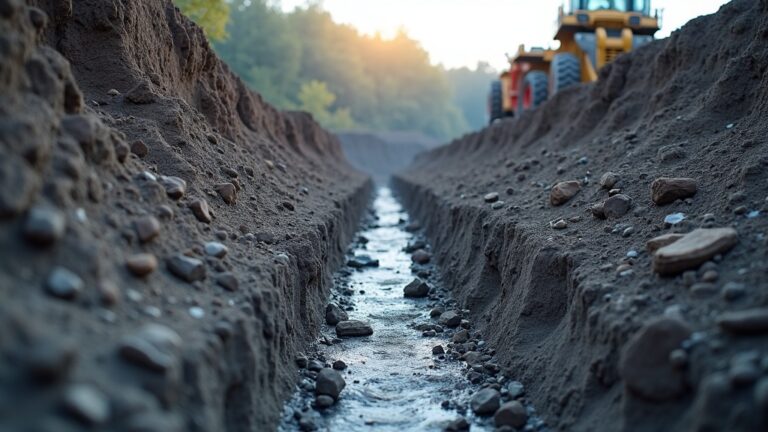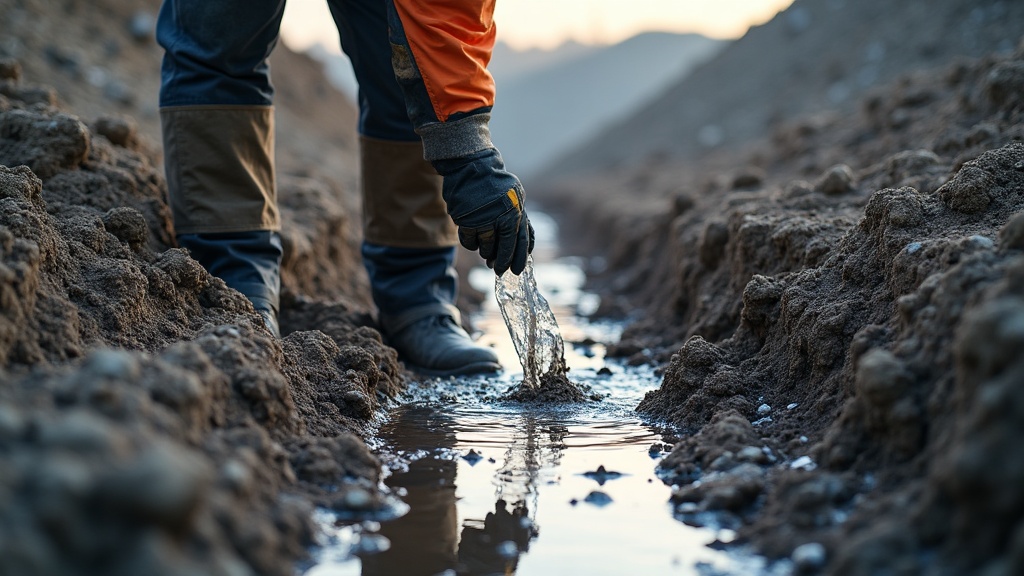
Learn how to backfill grouting in mining stabilizes underground voids, prevents subsidence, and improves safety. This guide covers methods, materials, and best practices for mine backfill grouting.
Table of Contents
- The Core Principles of Mine Backfill Grouting
- Materials and Mix Design for Backfill Grout
- Operational Methods: Containment and Infill Grouting
- Quality Control and Performance Monitoring
- Frequently Asked Questions
- Comparison of Backfill Grouting Approaches
- Practical Tips for Successful Backfill Grouting
- Final Thoughts on Backfill Grouting in Mining
Article Snapshot: How to backfill grouting in mining is the process of injecting a cementitious slurry into underground mine voids to stabilize the ground, prevent surface subsidence, and provide a safe working environment. It is a critical technique in both active and abandoned mine management.
Quick Stats: How to Backfill Grouting in Mining
- 9,559 cubic yards of cement–fly ash–sand grout were injected in a single deep mine backfilling project at Wabash Valley Correctional Institution to mitigate subsidence (Marino Engineering Associates, Inc., 2014)[1].
- A fly‑ash slurry backfill grouting project in a coal mine achieved a 40.63% reduction in surface subsidence after treating underlying voids (Advancing Coal Mining Fly Ash Slurry Backfill Grouting Case Study, 2023)[2].
- Mine backfilling in metal mines serves at least four primary objectives: stabilization of the mine, creation of a working floor, underground filling and tailings disposal, and subsidence and fire control (Montanuniversität Leoben, 2019)[3].
The Core Principles of Mine Backfill Grouting
Understanding how to backfill grouting in mining begins with recognizing that the technique is fundamentally about void filling and ground stabilization. As defined by mining engineer Anne M. Rajan of NIOSH, “Grouting is a general term that typically refers to the use of a fly ash–cement mixture as the backfill material, placed through boreholes to stabilize mine voids and reduce subsidence” (NIOSH, 2020)[4]. This definition captures the essence of the process: an engineered slurry is pumped into subsurface cavities to create a monolithic mass that supports the overlying strata.
The primary goal is to prevent catastrophic ground movement. When underground mines are abandoned or when active mining creates large voids, the natural support system is compromised. Left untreated, these voids can collapse, leading to sinkholes, structural damage to surface infrastructure, and safety hazards. Backfill grouting provides a proactive solution by filling these voids with a material that, once cured, bears the load of the overburden.
The process typically involves drilling boreholes from the surface down into the mine workings. Through these boreholes, a grout mixture is pumped under pressure. The grout flows into the void, filling cracks, fractures, and open spaces. Key to success is understanding the geology of the site, the geometry of the mine workings, and the properties of the grout itself. A thorough site investigation, including geophysical surveys and exploratory drilling, is the first step in any project.
Defining the Objectives
According to a 2019 study from Montanuniversität Leoben, mine backfilling in metal mines is introduced to achieve at least four primary objectives: stabilization of the mine, creation of a working floor, underground filling and tailings disposal, and subsidence and fire control[3]. These objectives guide the selection of materials and the design of the grouting operation. For example, if the primary goal is subsidence control under a critical structure, a high-strength, low-shrinkage grout may be specified.
Materials and Mix Design for Backfill Grout
The selection of materials is a critical component of how to backfill grouting in mining effectively. The most common backfill materials are cementitious slurries that incorporate a variety of industrial by-products. NIOSH has identified candidate mine backfill materials, including pulverized coal combustion fly ash, flue gas desulfurization by‑products, and fluidized bed combustion residues from coal‑fired power plants (NIOSH, 2012)[5]. These materials are often used because they are cost-effective, readily available near mining operations, and possess the pozzolanic properties needed for strength development.
The basic mix design consists of a binder (typically Portland cement), a filler (such as fly ash or sand), and water. The proportions are carefully controlled to achieve the desired flowability, setting time, and compressive strength. For containment grout, which is used to isolate sections of the mine, a higher cement content and a thicker consistency may be required. For infill grout, which fills the bulk of the void, a more flowable, lower-cost mixture is used.
Gennaro G. Marino, President of Marino Engineering Associates, Inc., describes this two-stage approach in a project bulletin: “During the grouting operation, each mine area was first contained by strategically placing containment grout in certain entries and crosscuts; once the mine areas were significantly contained, they were pumped with infill grout, which was lower in cost and more flowable than containment grout” (Marino Engineering Associates, Inc., 2014)[1]. This strategy optimizes both cost and performance.
The quality of the grout is verified through laboratory testing of trial mixes and field sampling during the operation. Key parameters include the grout’s viscosity, bleed water capacity, setting time, and unconfined compressive strength. A well-designed grout will have a low viscosity for easy pumping and penetration into small fractures, but it must also have sufficient cohesion to stay in place and not segregate.
Operational Methods: Containment and Infill Grouting
The operational execution of how to backfill grouting in mining generally follows a two-phase approach: containment and infill. This method, as described by Marino, is essential for managing large, complex mine voids. The first step is to create containment barriers. This involves pumping a thick, high-strength grout into specific entries and crosscuts to isolate a section of the mine. These barriers prevent the subsequent, more flowable infill grout from flowing uncontrollably into distant parts of the mine, ensuring that the targeted void is fully filled.
Once containment is established, the infill phase begins. Infill grouting proceeds across the mine, with each injection hole grouted to refusal. As Marino explains, “Infill grouting generally proceeded across the mine with each injection hole grouted to refusal, allowing backfill to penetrate rubblized zones and suppress potential subsidence beneath critical structures” (Marino Engineering Associates, Inc., 2014)[1]. Grouting to refusal means that pumping continues until the grout can no longer be injected at the design pressure, indicating that the void space in that area is filled.
The choice of drilling method is also important. The Wabash Valley Correctional Institution project required 41,349 linear feet of drilling to place containment and infill grout into underground mine voids (Marino Engineering Associates, Inc., 2014)[1]. This highlights the significant upfront work required to access the voids. Boreholes are typically drilled on a grid pattern, with spacing determined by the expected radius of grout spread.
For large-scale projects, hydraulic flushing is the most common placement method. As noted by Anne M. Rajan, “Hydraulic flushing and grouting, using remote methods from single or multiple boreholes, are the most often‑used methods for the placement of backfill material in abandoned underground mines” (NIOSH, 2020)[4]. This method uses water to transport the grout material through the borehole and into the void, where the solids settle and the water is displaced.
Quality Control and Performance Monitoring
Ensuring the success of a backfill grouting project requires rigorous quality control and performance monitoring. This is a crucial part of how to backfill grouting in mining correctly. The process begins before any grout is pumped, with a comprehensive site investigation. This includes mapping the mine workings, assessing the structural integrity of the surrounding rock, and determining the volume of voids to be filled.
During the grouting operation, real-time monitoring is essential. Key parameters to track include grout volume, injection pressure, flow rate, and the specific gravity of the grout. These data points help operators determine when a void is filled and when to move to the next injection point. The grout itself must be tested regularly for consistency and strength. Samples are taken from the mixing plant and the injection point to ensure the mix design is being followed.
Post-grouting verification is equally important. This can involve drilling confirmation boreholes to inspect the fill, performing geophysical surveys to detect any remaining voids, and monitoring surface subsidence over time. The success of a project is measured by the absence of ground movement and the stability of the treated area.
For active mines, the interaction between backfill and blasting operations must be managed. Mining engineer T. Bloss notes that “there are a number of operating practices that can be employed to manage the impact of dynamic loading on cemented backfill, including providing a standoff distance between blast holes and the backfill mass and specifying a lower limit on curing times prior to blasting” (Australian Centre for Geomechanics, 2014)[6]. This ensures that the backfill has gained sufficient strength before being subjected to the stresses of nearby blasting.
Important Questions About How to Backfill Grouting in Mining
What is the difference between containment grout and infill grout?
Containment grout is a high-strength, thicker mixture used to create barriers within the mine, isolating specific areas for treatment. It is designed to be less flowable so it stays in place and forms a solid wall. Infill grout, on the other hand, is a more flowable and often lower-cost mixture used to fill the bulk of the void space after containment is established. It is pumped to refusal, meaning it fills all available space within the contained area.
What materials are commonly used in backfill grout for mining?
The most common materials include Portland cement, fly ash, sand, and water. Fly ash, a by-product of coal combustion, is frequently used due to its pozzolanic properties and low cost. Other industrial by-products like flue gas desulfurization gypsum and fluidized bed combustion residues can also be used. The exact mix design is tailored to the project’s specific strength, flowability, and setting time requirements.
How is backfill grouting monitored during the operation?
Monitoring involves tracking several key parameters in real-time, including grout volume injected, pumping pressure, flow rate, and grout specific gravity. Operators use this data to determine when a void is full and when to move the injection point. Additionally, grout samples are regularly taken for laboratory testing to verify the mix design and ensure the material meets strength specifications. Post-grouting verification often includes drilling confirmation boreholes and geophysical surveys.
Can backfill grouting be used in active mines?
Yes, backfill grouting is a standard practice in many active underground mines. It provides a stable working floor, allows for the disposal of tailings, and improves overall mine safety. In active mines, the backfill must be designed to withstand dynamic loading from nearby blasting operations. This is managed by specifying a minimum curing time for the backfill before blasting and maintaining a standoff distance between blast holes and the backfill mass.
Comparison of Backfill Grouting Approaches
Different projects require different approaches to backfill grouting. The choice between methods depends on the mine’s geometry, the material available, and the project’s primary objectives. The table below compares two common approaches.
| Feature | Containment & Infill Grouting | Hydraulic Flushing |
|---|---|---|
| Primary Method | Two-stage process: first containment barriers, then infill pumping. | Single-stage process using water to transport material into voids. |
| Grout Type | Uses two different grout mixes: thick containment grout and flowable infill grout. | Typically uses a single, flowable slurry that settles out in the void. |
| Best Suited For | Large, complex mine voids requiring controlled filling and high strength. | Large, open voids where cost-effectiveness is the primary driver. |
| Key Advantage | Provides excellent void filling and high structural support. | Highly cost-effective for large areas and uses readily available materials. |
| Key Disadvantage | More complex operation requiring careful planning and execution. | May not provide the same level of structural strength as a cement-rich grout. |
Practical Tips for Successful Backfill Grouting
Executing a successful backfill grouting project requires careful planning and attention to detail. Here are several practical tips to ensure the best outcome.
- Conduct a thorough site investigation. Before any grout is mixed, invest in a comprehensive geotechnical study. Understanding the geology, void geometry, and groundwater conditions is essential for designing an effective grouting plan. Use geophysical surveys and exploratory boreholes to map the subsurface.
- Optimize your grout mix design. The grout must be tailored to the specific conditions of the mine. Test multiple mix designs in a laboratory to find the right balance of strength, flowability, and setting time. For large projects, consider using a two-stage approach with a more expensive containment grout and a lower-cost infill grout. For more details on specific techniques, refer to this backfillgrouting guide.
- Implement real-time monitoring. Use automated data logging systems to track grout volume, pressure, and flow rate. This data is critical for making decisions on when to stop pumping at a given hole. It also provides a permanent record of the work performed.
- Plan for quality control. Establish a rigorous testing program for the grout. Take samples at the plant and at the injection point. Test for compressive strength at 7, 14, and 28 days. Use the results to verify that the mix design is being followed and that the grout meets specifications.
- Manage dynamic loading in active mines. If the backfill is near active blasting, coordinate with the mine’s blasting team. Ensure that the backfill has adequate curing time before any blasting occurs. A standoff distance should be maintained to protect the fresh backfill from vibration damage.
For more about How to backfill grouting in mining, see learn more about how to backfill grouting in mining.
Final Thoughts on Backfill Grouting in Mining
Understanding how to backfill grouting in mining is essential for any operation concerned with ground stability, safety, and subsidence prevention. The technique has proven its value in projects ranging from stabilizing abandoned mines beneath critical infrastructure to providing a working platform in active mining operations. The combination of careful material selection, strategic containment and infill methods, and rigorous quality control forms the foundation of a successful project. As the industry continues to evolve, the use of advanced materials and real-time monitoring will further enhance the effectiveness of this critical ground control technique. For a deeper look at related techniques, explore our article on foundation backfill.
Further Reading
- Successful Deep Mine Backfilling to Mitigate Mine Subsidence. Marino Engineering Associates, Inc.
https://meacorporation.com/wp-content/uploads/project-bulletin-01.pdf - Advancing Coal Mining Fly Ash Slurry Backfill Grouting Case Study. Industry publication.
https://www.scribd.com/document/870308363/Advancing-Coal-Mining-Fly-Ash-Slurry-Backfill-Grouting - State of the Art of Backfill Technology in Underground Mining. Montanuniversität Leoben.
https://pure.unileoben.ac.at/ws/portalfiles/portal/2402127/AC12252913n01vt.pdf - State-of-the-Art Techniques for Backfilling Abandoned Underground Mines. NIOSH.
https://stacks.cdc.gov/view/cdc/206318/cdc_206318_DS1.pdf - Candidate Mine Backfill Materials. NIOSH.
https://stacks.cdc.gov/view/cdc/235651/cdc_235651_DS1.pdf - An Operational Perspective of Mine Backfill. Australian Centre for Geomechanics.
https://papers.acg.uwa.edu.au/d/1404_0.2_Bloss/0.2_Bloss.pdf