Discover our complete colloidalmixers guide to understand high-shear mixing, improve cement grout pumpability, and select the right equipment for your project.
Table of Contents
- The Mechanics of High-Shear Mixing
- Operational Parameters and Performance
- Applications Highlighted in Our colloidalmixers guide
- Equipment Selection and System Integration
- Important Questions About the colloidalmixers guide
- Comparing Mixing Technologies
- Practical Tips for Operators
Key Takeaway
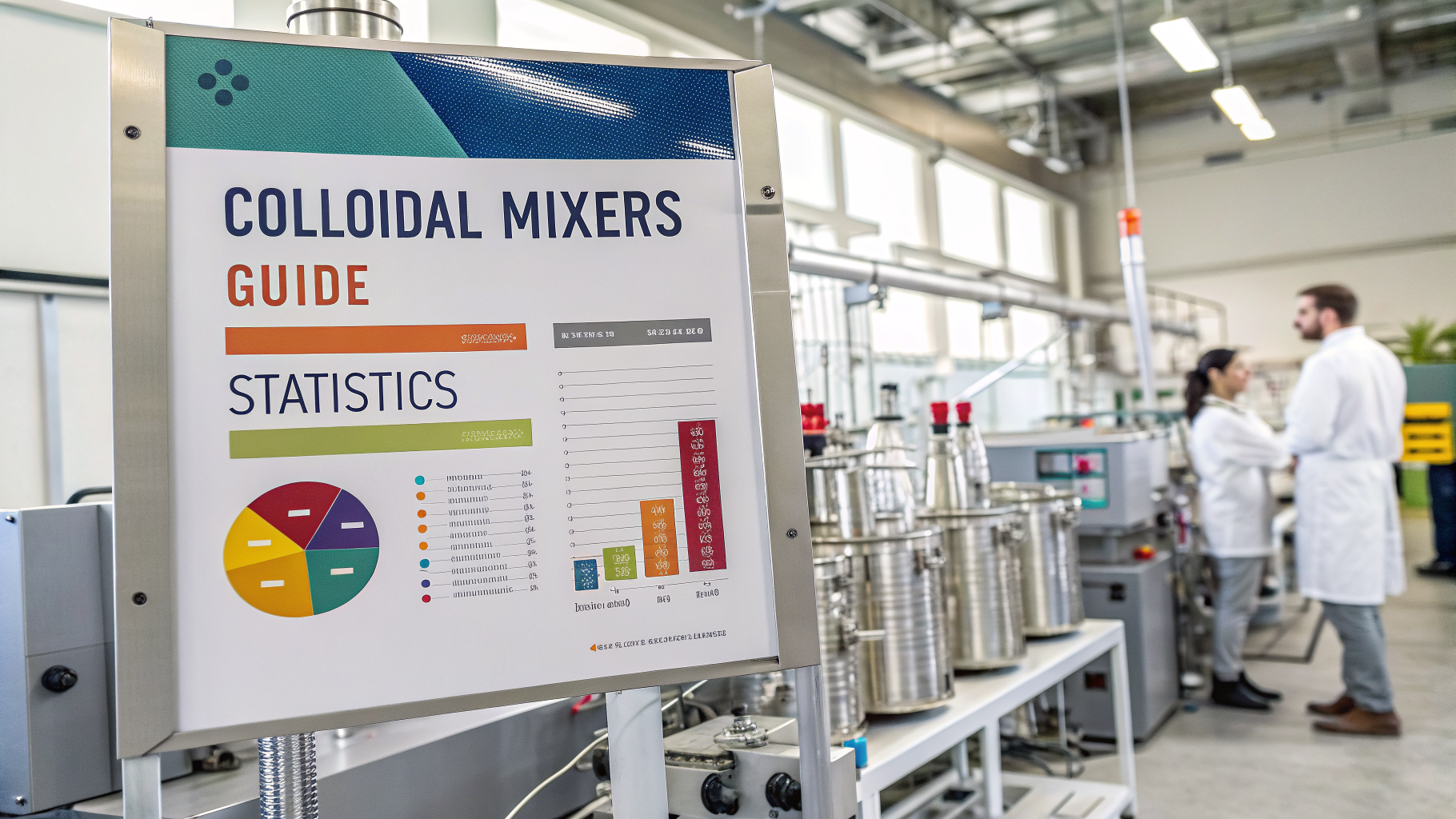
The colloidalmixers guide is an instructional framework explaining high-shear equipment used to produce stable cement grout. It details rotor speeds, batch volumes, and slurry fluidity, helping engineers select optimal machinery for demanding ground conditions and modern construction projects. This overview ensures proper grout preparation.
By the Numbers
- Modern systems provide capacity ranges from 2 to 110 cubic metres of grout per hour (AMIX Systems, 2025)[1].
- Advanced setups reliably handle very low water-cement ratios down to 0.33:1 while maintaining pumpable mixes (AMIX Systems, 2025)[1].
- High-shear units increase the apparent fluidity of slurry mixes by about 20 percent compared with paddle mixers (ChemGrout Inc., 2020)[2].
The colloidalmixers guide provides essential insights into the technology that revolutionized modern grouting. When dealing with complex subsurface environments, achieving a homogeneous slurry is critical for structural integrity. Traditional methods often fall short, leaving engineers searching for better grout preparation techniques. High-shear mixing addresses these challenges by applying intense mechanical forces to cement particles. This process dramatically improves suspension properties and overall pumpability. In this article, we explore the mechanical principles behind vortex action, examine crucial operational parameters like rotor tip speed, and compare different mixing approaches. Whether you are working on cemented rockfill in mining or dam grouting, understanding these systems is vital. We will also cover practical maintenance tips and answer common questions to help you maximize equipment lifespan and project efficiency. Read on to master the fundamentals of colloidal mixing.
The Mechanics of High-Shear Mixing
The fundamental principle behind colloidal mixing relies on generating intense hydraulic shear to completely disperse cement particles within a liquid medium. Unlike standard agitation, this process utilizes a specialized mixing tank and a high-speed rotor to create a powerful vortex action. As the slurry is drawn into the center and expelled outward, the resulting friction and shear forces break down agglomerates, ensuring a perfectly uniform consistency. Originally developed for specialized mining applications, this technology has since become a standard across civil engineering and dam construction.
According to industry experts, this mechanical advantage is unmatched. D. Sanders, a mining engineer, notes that “The high-shear colloidal mixer is generally recognised as the most efficient method of mixing cement-based grouts” (Simem Underground, 2025)[3]. To achieve this level of efficiency, the equipment relies on specific mechanical thresholds. For instance, colloidal mixers used for grout preparation in mining cemented rockfill systems typically operate with rotor tip speeds in the order of 20 to 30 metres per second to achieve the required shear (Simem Underground, 2025)[3].
The drive motor is the heart of this operation. Depending on the tank volume and required shear intensity, these systems commonly use drive motors in the 7.5 to 45 kilowatt range (Colcrete Ltd, 2024)[4]. This substantial power delivery ensures that the machine can maintain high rotational speeds even when processing dense, heavy slurries. For those looking to dive deeper into the basics of grouting infrastructure, you can welcome to our concrete grout platform to find foundational resources. Understanding these mechanical forces is the first step in mastering the colloidalmixers guide principles.
Operational Parameters and Performance
Achieving optimal grout quality requires strict control over operational variables such as batch volume, mixing cycle duration, and water-to-cement ratios. High-capacity colloidal mixers designed for tunnelling and dam grouting can offer batch volumes from approximately 300 to 1,000 litres per mixing cycle (Leadcrete Engineering, 2024)[5]. Despite these large volumes, the actual time required to reach a homogeneous state is remarkably short.
Under typical conditions, these machines can produce homogeneous slurries in as little as 2 to 3 minutes of mixing time per batch (CGS Equipment, 2024)[6]. This rapid processing is crucial for maintaining continuous pumping operations on large construction sites, where any delay can lead to costly downtime and cold joints in the grout structure. Furthermore, the intense shearing action fundamentally alters the rheology of the mix. The ChemGrout Engineering Group explains that “These high shear colloidal mixers have been shown to increase the apparent fluidity of slurry mixes by approximately 20% over conventional paddle mixers” (ChemGrout Inc., 2020)[2].
This increase in apparent fluidity allows operators to push the boundaries of mix design. Advanced colloidal grout systems can reliably handle very low water-cement ratios down to 0.33:1 while maintaining pumpable, uniform mixes (AMIX Systems, 2025)[1]. Lowering the water content significantly increases the final compressive strength and durability of the cured grout. By leveraging a comprehensive colloidalmixers guide, site engineers can confidently specify these low-ratio mixes, knowing the equipment will deliver the necessary pumpability without causing line blockages.
Applications Highlighted in Our colloidalmixers guide
Specialized ground conditions and deep underground environments demand highly stable grout mixes that resist separation and bleeding under extreme pressure. When injecting grout into fractured rock or soil, any water separation can lead to voids and structural weaknesses. The intense shearing action ensures that the cement and water remain tightly bound, creating a highly stable suspension that penetrates deep into micro-fissures.
The AMIX Systems Engineering Team highlights this benefit, stating that “Colloidal mixers are ideal when you need a very stable, high-shear grout mix with excellent suspension properties for demanding ground conditions” (AMIX Systems, 2025)[1]. This stability is particularly vital in mining operations where cemented rockfill is used to support underground voids. The grout must travel long distances through pipelines without segregating.
These systems are also highly adaptable to different material inputs. For example, Colcrete colloidal mixers are designed to produce grout with a maximum sand content of up to 4 millimetres particle size, allowing the use of fine sand aggregates in mixes (Colcrete Ltd, 2024)[4]. This flexibility enables the creation of stronger, more economical mixes by incorporating locally available fine aggregates. For broader regulatory and technical standards, engineers often consult federal highway grouting specifications to ensure compliance. Following a detailed colloidalmixers guide ensures that these demanding applications are executed flawlessly.
Equipment Selection and System Integration
Choosing the right machinery involves evaluating the specific project requirements against the technical capabilities of available mixing systems. The selection process begins with calculating the required hourly output. Modern colloidal grout mixers can provide capacity ranges from 2 to 110 cubic metres of grout per hour, enabling high-productivity mixing operations (AMIX Systems, 2025)[1]. Matching this output to the pumping rate prevents bottlenecks and ensures a continuous workflow.
Integration with downstream pumping equipment is equally critical. The high apparent fluidity generated by the mixer reduces the friction loss in delivery hoses, allowing for longer pumping distances. However, the entire system must be balanced. If the pump cannot keep up with the mixer, the slurry may sit in the agitation tank for too long, potentially leading to false set or temperature buildup. Conversely, if the pump outpaces the mixer, operators might be forced to short-cut the mixing cycle, compromising grout quality.
Industry platforms like colloidalmixers.com offer valuable insights into matching these components for specific project scales. When planning a project, it is also wise to explore our latest grouting articles for ongoing updates on equipment trends. Ultimately, a well-researched colloidalmixers guide will emphasize that the mixer, pump, and delivery lines must be treated as a single, cohesive system to achieve optimal results in the field.
Important Questions About the colloidalmixers guide
What is the main advantage of using a colloidal mixer over a paddle mixer?
The primary advantage is the significant increase in apparent fluidity and stability. High-shear colloidal mixers increase the apparent fluidity of slurry mixes by about 20 percent compared with conventional paddle mixers (ChemGrout Inc., 2020)[2]. This intense shearing action completely disperses cement particles, preventing segregation and allowing the grout to penetrate finer fissures in the ground while maintaining pumpability over long distances.
How long does a typical mixing cycle take for cement grout?
Despite processing large batch volumes, the actual mixing time is remarkably short. Under typical conditions, colloidal grout mixers can produce homogeneous slurries in as little as 2 to 3 minutes of mixing time per batch (CGS Equipment, 2024)[6]. This rapid cycle time is essential for maintaining continuous pumping operations on large-scale construction and mining sites, ensuring that the delivery pump never runs dry.
Can these mixers handle aggregates like fine sand?
Yes, many modern systems are designed to incorporate fine aggregates. For instance, specific colloidal mixers are engineered to produce grout with a maximum sand content of up to 4 millimetres particle size (Colcrete Ltd, 2024)[4]. This capability allows contractors to use locally sourced fine sand, which can improve the compressive strength and reduce the overall material cost of the grout mix without sacrificing the required suspension properties.
What water-to-cement ratio can high-shear systems reliably handle?
Advanced colloidal grout systems are capable of handling extremely stiff mixes. They can reliably process very low water-cement ratios down to 0.33:1 while still maintaining a pumpable and uniform consistency (AMIX Systems, 2025)[1]. Utilizing these low water-to-cement ratios results in a much denser, stronger, and more durable cured grout, which is highly desirable for critical structural and geotechnical applications.
Comparing Mixing Technologies
Selecting the right equipment requires understanding how different technologies perform under varying project constraints. While standard agitation works for simple tasks, complex geotechnical projects demand superior rheological control. The following table outlines the key differences between standard agitation and high-shear technologies, highlighting why a detailed colloidalmixers guide is essential for project planning.
| Feature | Paddle Mixers | Colloidal Mixers |
|---|---|---|
| Shear Mechanism | Low-speed agitation | High-speed vortex and shear |
| Apparent Fluidity | Baseline standard | 20% increase over baseline |
| Minimum W/C Ratio | Typically 0.45:1 or higher | Down to 0.33:1 |
| Mixing Time | 5 to 10 minutes | 2 to 3 minutes |
Practical Tips for Operators
Operating high-shear equipment efficiently requires adherence to specific best practices to ensure longevity and consistent grout quality. Proper maintenance and operational discipline are just as important as the mechanical capabilities of the machine itself.
- Monitor Rotor Wear: The intense friction required to achieve high rotor tip speeds causes gradual wear on the rotor and stator. Inspect these components weekly and replace them when clearances exceed manufacturer specifications to maintain shear efficiency.
- Sequence Material Addition: Always add water to the mixing tank before introducing cement and aggregates. This prevents dry cement from packing at the bottom of the tank and ensures the vortex action can immediately begin dispersing the particles.
- Control Batch Temperatures: High-shear mixing generates significant heat. In hot climates, use chilled water or ice flakes to keep the slurry temperature below 25°C, preventing premature flash setting and preserving pumpability.
- Flush Thoroughly: Immediately after pumping, flush the mixing tank and delivery lines with clean water. The high density of low water-cement ratio mixes means they can harden rapidly inside the machine if left unattended.
Following these operational guidelines ensures that the equipment delivers consistent results throughout the project lifecycle.
Wrapping Up
Mastering the principles outlined in this colloidalmixers guide is essential for any engineer or contractor involved in modern geotechnical and structural grouting. By leveraging high-shear technology, teams can achieve superior grout stability, lower water-cement ratios, and faster mixing cycles. These advantages translate directly into stronger structures and more efficient project execution. To continue expanding your knowledge of grouting technologies and equipment maintenance, explore more detailed resources and case studies available on concretegrout.com.
Sources & Citations
- Complete Mixer for Grout Selection Guide 2025. AMIX Systems.
https://amixsystems.com/mixer-for-grout/ - Colloidal Grouting Equipment – Product Bulletin. ChemGrout Inc.
https://www.chemgrout.com/wp-content/uploads/2020/03/ChemGrout-Colloidal.pdf - The Development of Colloidal Mixer Based CRF Systems. Simem Underground.
https://simemug.com/wp-content/uploads/Development-of-Colloidal-Mixer-Based-CRF-Systems.pdf - Mixing & Pumping Equipment – Colcrete Mixer Description. Colcrete Ltd.
https://colcreteltd.com/products/ - High Capacity Colloidal Mixer. Leadcrete Engineering.
https://m.leadcrete.com/news/high-capacity-colloidal-mixer.html - Grout Mixers Pumps Colloidal Mixers. CGS Equipment.
https://cgsequipment.com.au/grout-mixers-pumps/colloidal-mixers/
For more about Colloidalmixers guide, see Colloidalmixers Guide.